This is a long, painstaking, but very necessary process.Hours and hours are spent on this. Each sonnet has to be pulled apart word by word. It's not enough to have a general idea of what the sonnet means, you have to understand every word and exactly what Shakespeare is saying. Obviously there are many interpretations of the metaphorical meanings of an image and many of the words themselves carry different meanings. But it is our job to understand these and convey them to the audience so they can understand the language as well (and sometimes, as in the case of the many puns Shakespeare throws in, we need to play several meanings at once). Not an easy job! With a generalised performance there is the danger the audience will switch off. We don't want a wave of poetic language sweeping across the audience - we want them to have a much deeper experience.

I worry that the actors are bored by this - it's something that I love to do, but not everyone is such a word nerd! Interest can wane when working on a sonnet that isn't one of yours. Arguing over shades of meaning. Pulling apart the structure. We intersperse this with physical work and improv, but then it's back to the words.

I find the language of these sonnets and the thoughts behind them incredibly moving. It's so embarrassing, but the cast is used to me tearing up as we work through them.

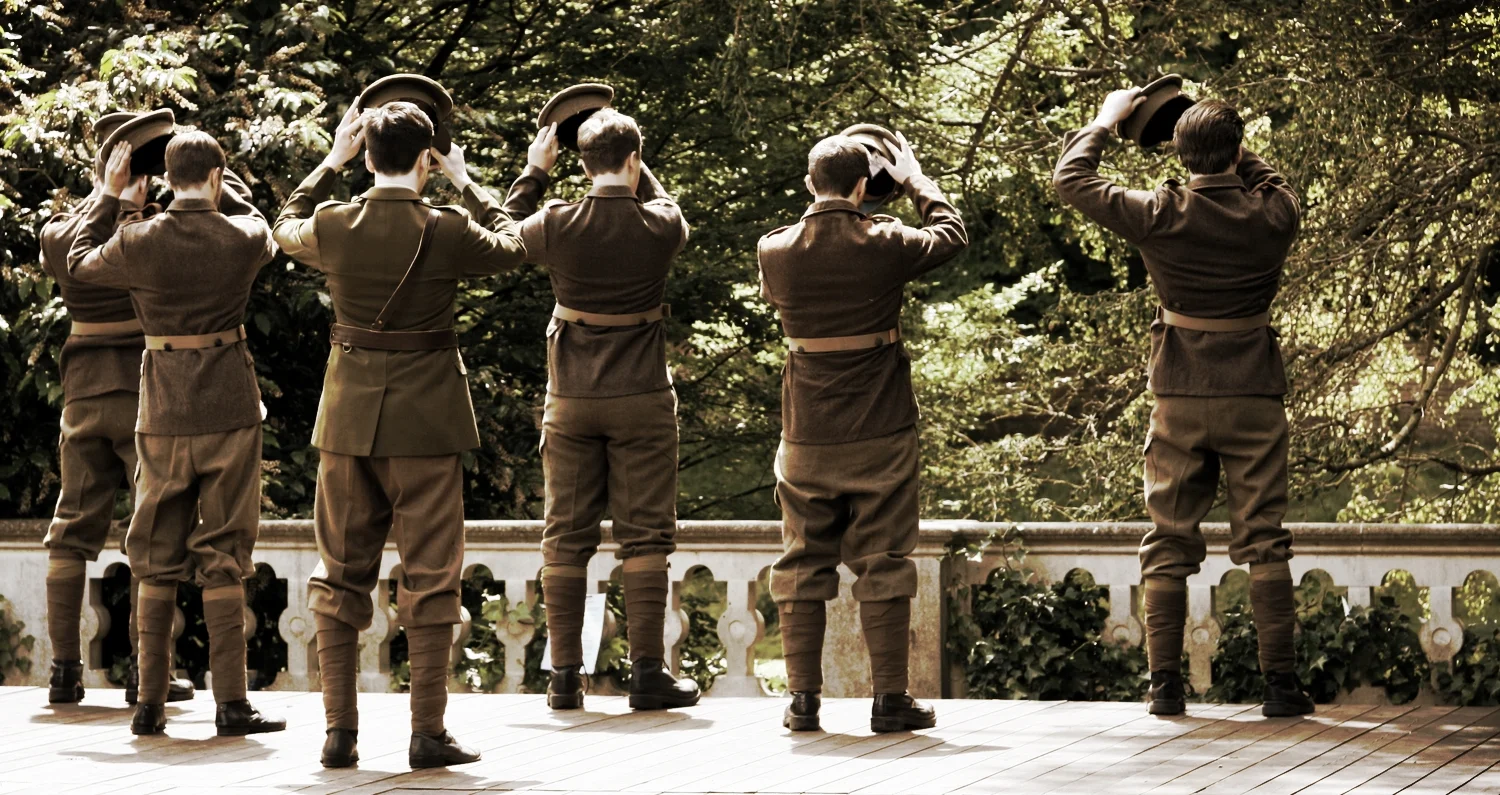
Would the soldiers at that time have had more exposure to poetry and to the Sonnets in the classroom? Probably. Did the horrors of the world around them make them look to poetry as a way of escape? There is, of course, the whole genre of the War Poets. Do the Sonnets fit with WWI better than with a contemporary war? No, of course not. I think they speak for - at the risk of sounding pretentious, and completely obvious - all humanity. Anywhere. Any time.
Street Address
City, State, Zip
Phone Number
theatre company
Your Custom Text Here
Blog
Summary Block
